A Guide to Participating in the Sung Mass on Sundays according to the Traditional Roman Rite
What is the Mass? How do we attend the Mass?
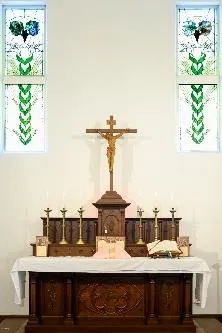
The Mass is both a perpetual commemoration of the sacrifice on the Cross and a sacred banquet in which we partake of the Body and Blood of Christ. In the Traditional Mass, all face the same direction towards God in worship. The priest, acting in the person of Christ, celebrates the Mass, and the congregation participates by offering their gratitude and praise to God.
Gregorian Chant and Responses During the Mass
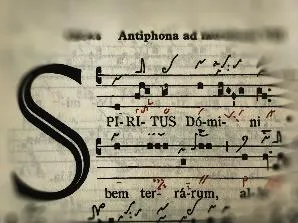
In the Traditional Mass, Gregorian Chant is sung. Congregants meditate in silence while listening to the choir, though they may also sing along. Acolytes respond on behalf of the congregation during the Mass, but when phrases like “Amen” are to be said aloud, it is encouraged to join in.
1. Procession of the Priest and Servers
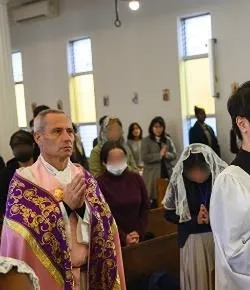
When the bell rings, the congregation stands. As the priest and servers process toward the altar, hymns such as the “Ave Maria” are sung.
2. Asperges
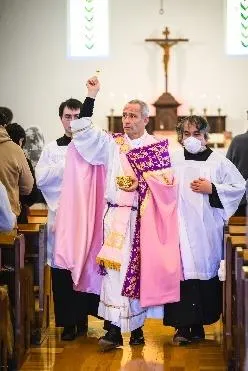
During the singing of “Asperges me” (or “Vidi aquam” during the Easter season), the priest sprinkles the congregation with holy water as a symbolic cleansing from venial sins.
3. Prayers at the Foot of the Altar
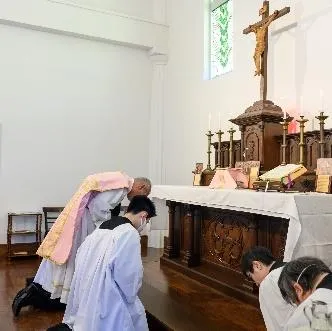
While the Introit is sung, the priest and acolytes recite the Prayers at the Foot of the Altar in alternation. The congregation stands, silently confessing their sins in preparation alongside the priest.
Note: The Introit, together with the other prayers and readings proper to the day, is provided with the Latin text and English translation on the page for the next Mass. The links in this guide lead to the corresponding parts of that page.
4. Beginning of the Mass
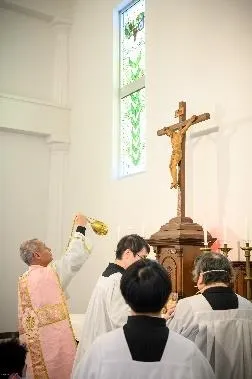
The Kyrie is sung as a plea for God’s mercy, with the congregation remaining standing. The priest ascends the steps of the altar and incenses it, praying that our prayers may rise to God like the smoke of the incense. After the Kyrie, the priest begins singing “Gloria in excelsis Deo” (Glory to God in the highest), and the Gloria, a hymn praising the glory of God, is sung. The congregation sits when the priest sits during the singing. The Gloria is omitted during penitential seasons (e.g., Lent).
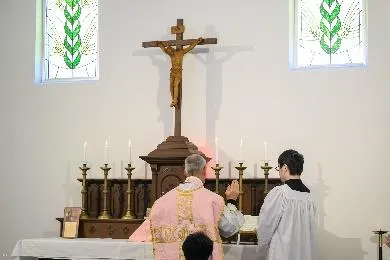
After the Gloria, the congregation stands. The priest faces the congregation and says “Dominus vobiscum” (The Lord be with you), and the server responds “Et cum spiritu tuo” (And with your spirit). The priest then turns to the Missal and says “Oremus” (Let us pray), leading into the Collect, which is the Church’s prayer for the day. The server concludes the Collect with “Amen.”
The priest then reads the Epistle, and the congregation sits. At the end of the reading, the server says “Deo gratias” (Thanks be to God). In the Traditional Mass, there are typically two readings from Scripture (the Epistle and the Gospel).
After the readings, the Gradual and Alleluia (or Tract and Sequence during certain seasons) are sung. As the chanting concludes, the priest prepares the incense and prays at the center of the altar, ready to proclaim the Gospel.
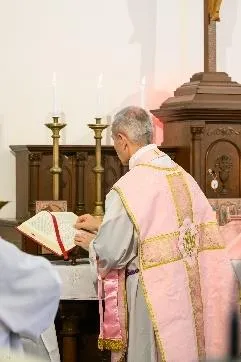
The priest then moves to the left side of the altar, says “Dominus vobiscum,” and the congregation stands. The priest proclaims the Gospel, which directly recounts the words and deeds of Christ. After the Gospel, the priest moves to the pulpit to deliver the homily, and the congregation sits.
When the homily ends, the congregation stands. The priest returns to the center of the altar and begins the Creed, “Credo in unum Deum” (I believe in one God). The Creed is a solemn profession of faith in Christ’s words. During the phrase “Et incarnatus est” (And was incarnate), the congregation kneels. If the priest sits during the singing of the Creed, the congregation does as well.
5. Offertory
After the Creed, the priest faces the congregation and says “Dominus vobiscum” before calling “Oremus.” When the bell rings, the Offertory chant begins, and the congregation sits. The priest prays the Offertory prayers in a low voice, offering bread and wine to God. These prayers are said quietly to emphasize the sacred and mysterious nature of the moment and to allow the priest to concentrate on his service to the whole Church. In silent prayer, the congregation offers their own lives and daily actions to God, hoping that the sacrifice of the Mass will be accepted and that their prayers will reach God.
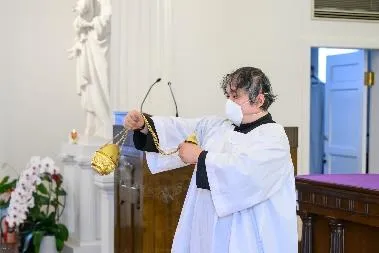
The priest again incenses the altar. The server incenses the congregation, who stand and bow their heads before sitting again.
At the end of the Offertory, the priest turns to the congregation and says “Orate, fratres” (Pray, brethren), and the server prays that God may accept the offerings. The priest then recites the Secret prayer quietly, which is the final prayer over the offerings. He concludes with “Per omnia saecula saeculorum” (Forever and ever), to which the server responds “Amen,” and the congregation stands.
The priest then recites prayers alternately with the server before chanting the Preface aloud. The priest prays that we may offer the Eucharist with deep devotion, united with the angels. As the bell rings, the Sanctus is sung. When the hymn ends, the congregation kneels.
6. Canon of the Mass and the Consecration
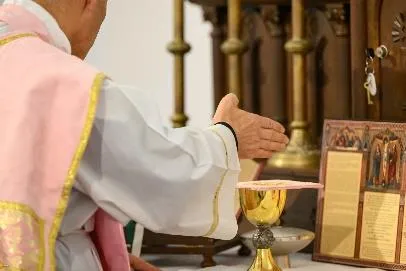
The Canon of the Mass is a prayer of thanksgiving and consecration, reaching its climax in the Consecration, where the bread and wine are transformed into the Body and Blood of Christ. The priest says all prayers quietly. He elevates the Host and the Chalice, and the congregation adores them in silence. In deep reverence and awe, the congregation watches this sacred mystery, offering thanks for the mercy and forgiveness granted to us, and prays for all people as members of the universal Church.
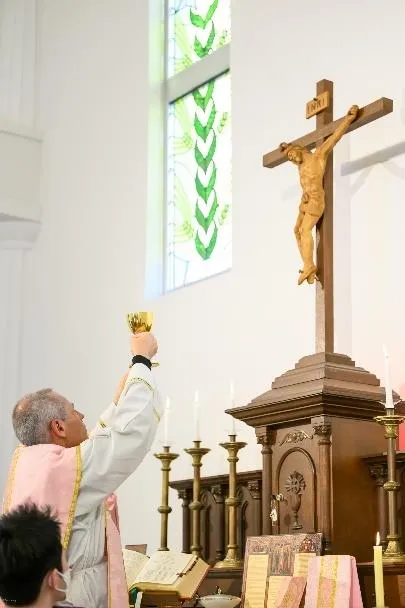
At the end of the Canon, the priest recalls that the offering was made through, with, and in Christ. When the bell rings and the priest says aloud “Per omnia saecula saeculorum,” the server responds with “Amen,” and the congregation stands.
7. Communion
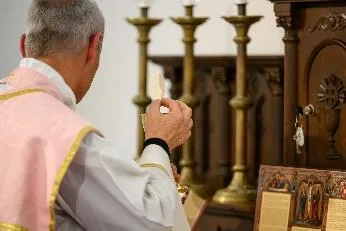
The priest begins by chanting the Lord’s Prayer, the prayer our Savior Himself taught us. The congregation joins in by singing only the part, “Sed libera nos a malo” (“But deliver us from evil”). Following this, the priest prays quietly for peace, then says, “Per omnia saecula saeculorum”. He then chants, “Pax Domini sit semper vobiscum” (“May the peace of the Lord be always with you”) and proceeds to break the Host. The Agnus Dei (“Lamb of God”) is sung, proclaiming that Christ is the true Lamb sent to redeem our sins and pleading for God’s mercy and peace. When the hymn concludes, the faithful kneel.
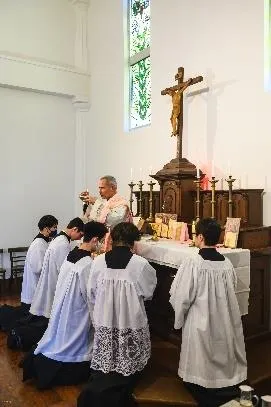
The act of Communion signifies receiving Christ, truly present in the Holy Eucharist, and uniting with Him (Communio). At the center of the altar, the priest bows his head and recites three prayers in a low voice in preparation for Holy Communion. During this time, the congregation also prays for peace and the unity of the Church. The priest first receives both the Body and Blood of Christ. He then faces the congregation and, showing them the Host, proclaims, “Ecce Agnus Dei” (“Behold the Lamb of God”). This is the moment to pray for humility and to prepare to receive the Holy Eucharist worthily.
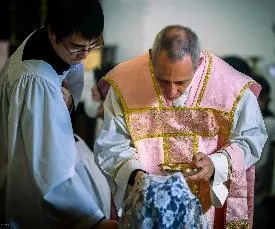
As the Communio chant is sung, Catholic faithful who wish to receive Communion form a line and kneel in a row in front of the altar rail. In the Traditional Latin Mass, the Host is received on the tongue. Open your mouth wide and rest your tongue lightly on your lower lip to make it easier to receive. Note that the communicants do not say “Amen” when receiving the Eucharist. Once you return to your pew, you may sit down.
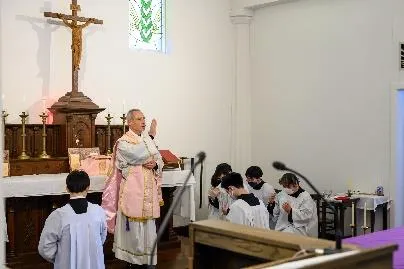
After Communion is finished and the priest has purified the chalice, he turns to the congregation and says, “Dominus vobiscum”, at which point the congregation stands. The priest moves to the right side of the altar and recites the Postcommunion prayer. He then returns to the center, says “Dominus vobiscum” again, and chants, “Ite missa est” (“Go, the Mass is ended”). The server responds, “Deo gratias” (“Thanks be to God”), and the Mass comes to a conclusion. The priest then offers a final prayer in a low voice, facing the altar, and bestows a blessing upon the congregation. The faithful kneel, make the sign of the cross, and then stand up.
8. Last Gospel
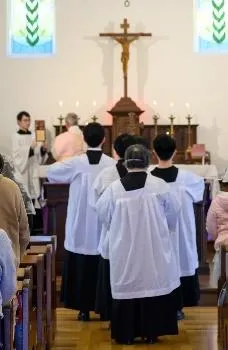
As an act of thanksgiving after Mass, the priest moves to the left side of the altar and recites the Prologue of the Gospel of John. When the words “Et Verbum caro factum est” (“And the Word was made flesh”) are proclaimed, the congregation genuflects and then stands.
9. Recessional Procession
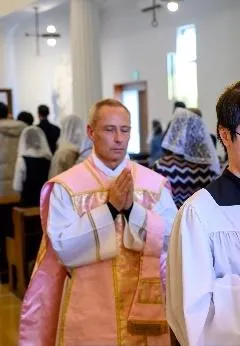
As the seasonal Marian hymn or other appropriate chants are sung, the priest and servers depart from the altar. This symbolizes the sending forth (Missio) of the faithful into the world.
For inquiries about the Traditional Latin Mass schedules or details, please contact Una Voce Japan. The office staff of the respective churches are not able to provide specific information. To receive updates on schedules and other notifications, please subscribe to our mailing list.
In the history of the liturgy there is growth and progress, but no rupture. What earlier generations held as sacred, remains sacred and great for us too.
— Pope Benedict XVI
All photos included in this guide may not be reproduced without permission.